Stone Post Stubborn
“I wish I didn’t know now what I didn’t know then.” – Bob Seger
By DAVE BERRY
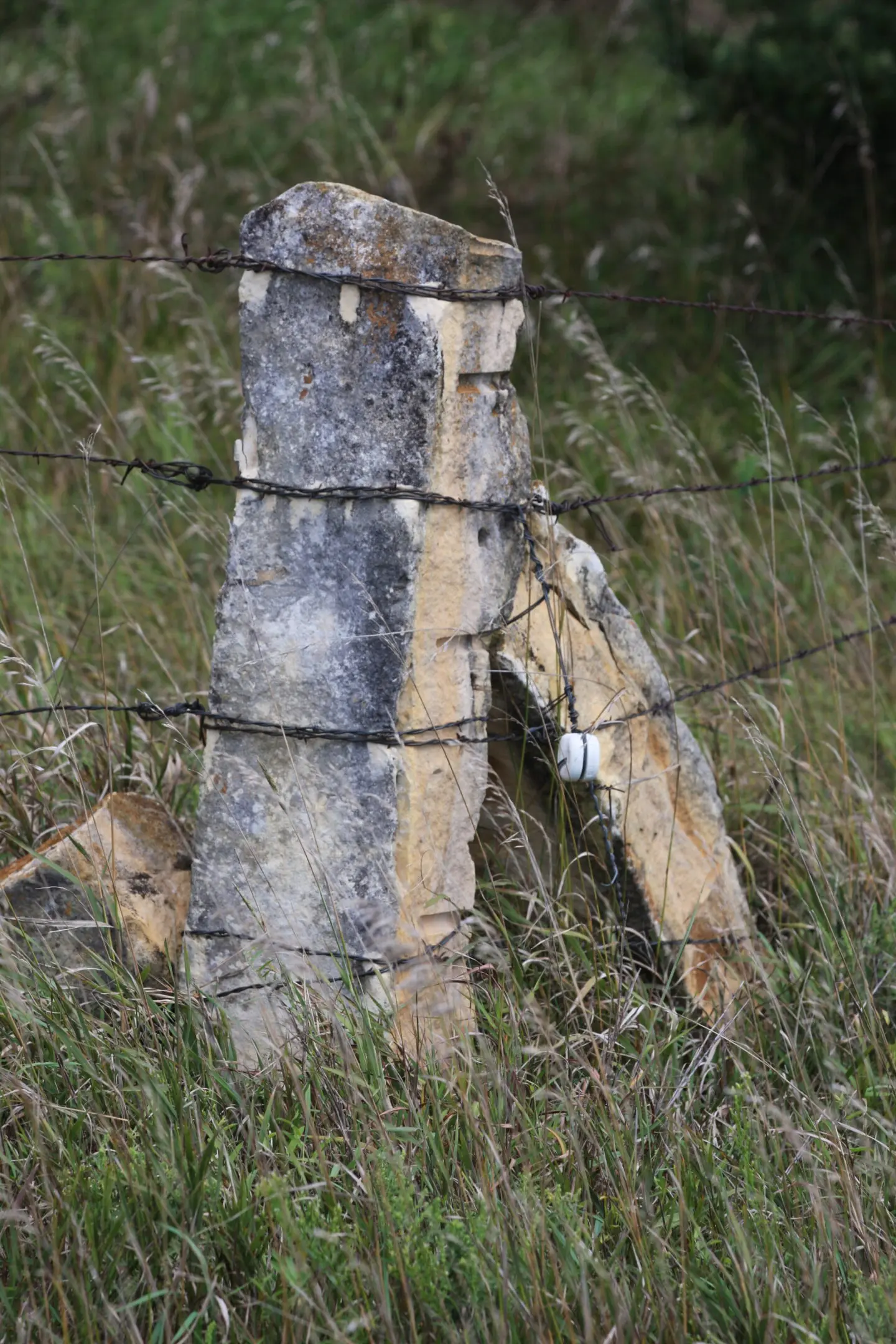
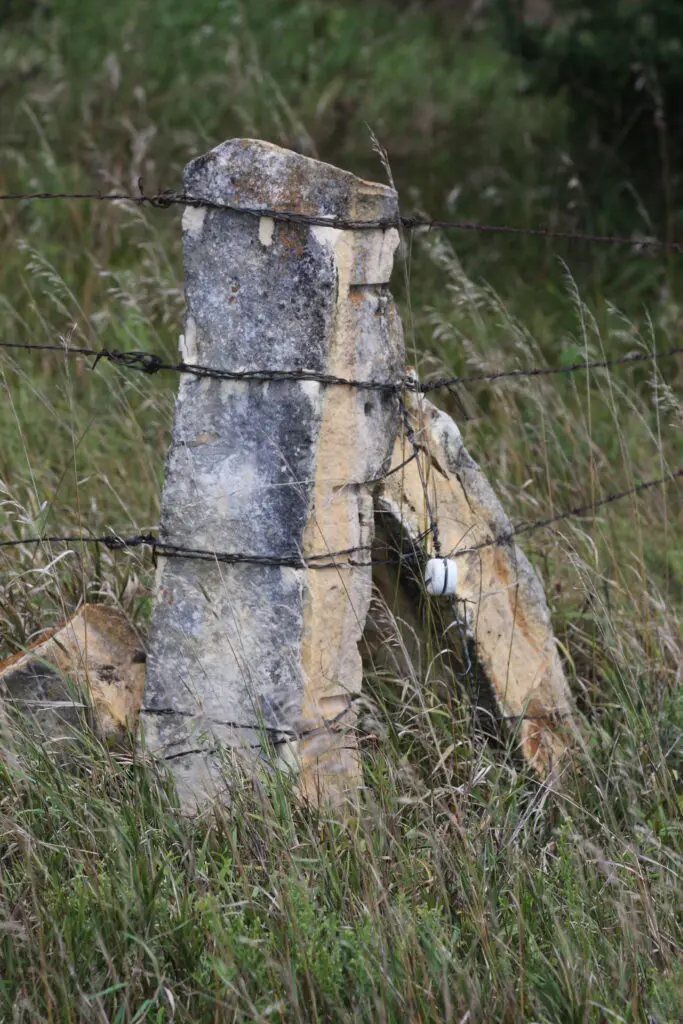
The native limestone post, rooted deep in the black Kansas soil, leans stubbornly into the wind. Ragged traces are all that remain of the original barbed wire. Snugged tight against the yellow rock by a long-ago tenant of the land, most of the original coils have long since turned to rust, replaced or bypassed by newer strands – tight, bright and orderly.
Tufts of red hair from wayward herefords dance from barbs singing in the winter gale. A dusting of snow, whipped by gusts from the north, searches for footing in the short-cropped pasture grass and swirls into tiny drifts around the post’s base. A family of jackrabbits, sheltered on the sunny side of the prairie windbreak, burrows warmly in a shallow depression.
The stone post has outlasted us all. The oldest men can’t remember when it wasn’t there, but sons and grandsons of men who hefted the stone into its hand-dug hole can tell you how it and the thousands of others came to corral the farms.
In the dead of winter, they say, holes were drilled into the quarry limestone and filled with water to freeze. As the ice expanded, slabs of soft yellow rock broke free of their earthly bed and were hauled by wagon to the fence line. Once in place, weathered and hardened by time, the posts become a part of the land, a part of the life of the farm.
Today, along the beaten tractor path, the stone post holds its position on the border between brown buffalo grass and green winter wheat. For more than a century, it has welcomed to its side young boys who traced with their fingers the fossilized remains of sea creatures encased in its limestone sides. It has served as a springtime perch for the meadowlark, a summer stanchion for a farmer’s water jug, a scratching post for young bulls, and a midnight meeting point for crooning coyotes.
Once there was no barrier to the land, which ran clear and unfettered to the horizon. Bison covered the plain and native tribesmen rode free in their pursuit of the hunt. Little except the clattering cottonwoods along the creek slowed the wind and broke the monotony of the undulating sea of grass.
But now the limestone post – man-made yet very natural – is a part of that landscape, almost as much as the buffalo wallows that still dot the pasture.
The farmhouse is gone, long since moved off its foundation to a new life in town. Only a gaping hole in the ground marks where it stood through four generations of Berrys. Steps lead down into the old cellar, where the rusted frame of a sewing machine rests comfortably amid the jumble of tumbleweeds. The elms still sprawl and drop their wind-whipped branches over the lilac bushes.
Massive cedars, planted small by little boys helping their dad, now overwhelm what was once the front porch. A walk of flat limestone slabs still leads to what was the back step, where bluebottle flies buzzed around the well-used screen door that slammed regularly with the coming and going of five small children.
The windmill too is shattered, victim of a summer storm. The barn sags ever lower, and the little pond is but a circle of drying mud. Another generation tills the soil, repairs the combine and hunts the pheasants along the tree row. The limestone fence posts remain, holding their ground, refusing to move easily out of the way for modern convenience.
They are solid, anchoring the many memories of that Kansas farm and of growing to manhood amid the wind and dust and swirling snow. Like the swaying elms rising above the cedars, the aging white grain elevators guarding the southern horizon and the low rolling hills rising in the east, the stone posts stand today, tall, stubborn and unchanging.
###
Dave Berry is the retired editor of the Tyler Morning Telegraph. His Focal Point column ran each Wednesday on the front of the My Generation section. This column was published on Feb. 10, 2016.